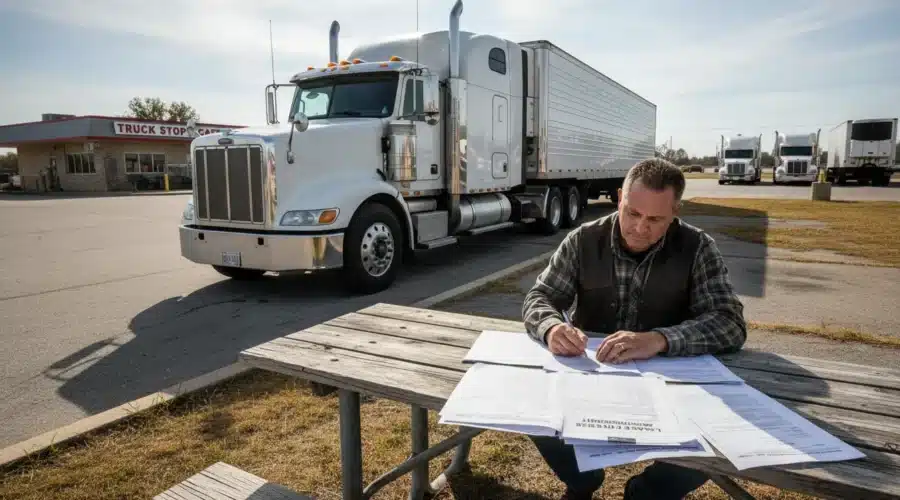
The path to becoming an owner-operator is filled with exciting opportunities, from choosing your own truck to deciding which routes to run. While programs like our Rent 2 Own option can help you get the equipment you need, there are some administrative steps you have to take yourself. Getting your DOT number is one of them. This unique number registers your business with the federal government and proves you’re a compliant, professional carrier. Taking this step is a major part of transitioning from a company driver to a true entrepreneur. This guide is designed to give you the confidence to handle this task by showing you exactly how to apply for dot number and what to expect along the way.
Key Takeaways
- Your DOT number is your official safety ID: It’s a free, unique identifier from the FMCSA that’s required for most commercial operations, especially if your truck is over 10,001 pounds or you cross state lines. This number is how regulators track your business’s safety record.
- Preparation makes the application easy: The fastest way to get your DOT number is by applying online. Before you start, have your business details, vehicle information, and proof of insurance ready to go; this will help you complete the MCS-150 form without any delays.
- Staying compliant is an ongoing job: After getting your number, you must display it correctly on your truck and file a mandatory update every two years. Keeping your registration current and your safety files organized is essential for avoiding fines and keeping your business on the road.
What Is a DOT Number and Why Do You Need One?
If you’re ready to become your own boss, one of the first official steps is getting your business on the books. A U.S. Department of Transportation (DOT) number is a unique identifier that does just that. Think of it as a special ID for your trucking business, allowing you to operate legally as a commercial entity. The Federal Motor Carrier Safety Administration (FMCSA) uses this number to track your company’s safety information, which comes into play during roadside inspections, compliance reviews, and accident investigations. It’s the government’s way of keeping a record of your business’s safety performance, separate from your personal driving record.
Most commercial trucking businesses need a DOT number, especially if you plan to carry goods or passengers across state lines. Even if you only operate within a single state, many now require one for intrastate commerce, so it’s always best to check your local regulations. You will definitely need a DOT number if your commercial vehicle meets certain criteria. This includes vehicles that weigh 10,001 pounds or more, transport hazardous materials requiring a safety permit, or are designed to carry a specific number of passengers (more than 8 for-hire, or more than 15 not-for-hire). Getting this number is a foundational step in building your independent trucking career and showing you’re a safe, compliant professional.
DOT vs. MC Number: What’s the Difference?
It’s easy to get DOT and MC numbers confused, but they serve different purposes. Your USDOT number is all about safety. It’s the primary number the government uses to keep a file on your company’s safety management and compliance history. It’s important to remember this number is tied to your business, not your personal Commercial Driver’s License (CDL). An MC (Motor Carrier) number, on the other hand, is about your operating authority. You’ll often need an MC number if you plan to transport passengers or federally regulated goods across state lines as a for-hire carrier. While many carriers need both, the key difference is simple: the DOT number registers your truck with the FMCSA for safety tracking, while the MC number grants you the authority to operate in certain ways.
How the FMCSA Uses Your DOT Number
The Federal Motor Carrier Safety Administration, or FMCSA, is the agency responsible for making our roads safer by reducing crashes involving large trucks and buses. Your DOT number is the main tool they use to accomplish this mission. It connects your business to a public safety profile that includes inspection results, compliance reviews, and accident reports. When an officer pulls you over for a roadside inspection, they use your DOT number to look up your company’s record. The FMCSA also uses this data to identify patterns and determine which carriers might need additional safety monitoring or educational outreach. Having a DOT number means you are part of a national system designed to uphold safety standards across the entire industry, which helps protect you, your business, and everyone else on the road.
Do You Need a DOT Number?
Before you can hit the road as an owner-operator, you need to make sure your business is compliant. The first question to ask is whether you need a US Department of Transportation (DOT) number. Think of it as your truck’s official ID for federal regulators. For most professional drivers, the answer is a clear “yes,” but the rules depend on your truck, your routes, and what you’re hauling. Let’s break down the three main factors that determine if you need to register for a DOT number. It’s a critical step toward running your own operation legally and safely.
Check Your Vehicle’s Weight
The most straightforward rule comes down to weight. You are required to have a DOT number if your vehicle has a gross vehicle weight rating (GVWR) of 10,001 pounds or more. If you’re pulling a trailer, the rule applies to the gross combination weight rating (GCWR), which is the total weight of your truck plus the trailer. Since most commercial trucks easily exceed this limit, this is the main reason why so many drivers need to get a DOT number. This isn’t a guideline; it’s a firm requirement from the Federal Motor Carrier Safety Administration (FMCSA) to track safety and compliance for commercial vehicles operating on public roads.
Crossing State Lines: Interstate vs. Intrastate Rules
Your routes play a big role in whether you need a DOT number. If you plan to haul freight across state lines, you’re engaging in what’s called “interstate commerce,” and a DOT number is mandatory. This applies to almost every driver working with a company like AG Express Line, since our logistics services cover the 48 contiguous states. But what if you only plan to drive within a single state? Many states still require you to have a DOT number for “intrastate commerce.” The rules can vary, so it’s always a good idea to check your home state’s specific requirements to ensure you’re fully compliant before you start hauling loads.
Hauling Hazmat or Transporting Passengers
The type of cargo you carry can also trigger the need for a DOT number, regardless of your vehicle’s weight. If you transport hazardous materials that require a safety permit, you must have a DOT number. This is a strict federal regulation designed to ensure public safety. The rules are also clear for passenger transport. You’ll need a DOT number if your vehicle is designed to carry nine or more paying passengers or 15 or more passengers in total (including the driver). While most freight owner-operators won’t fall into these categories, it’s important to know the regulations, especially if you ever consider expanding your trucking business into different sectors.
What to Prepare Before You Apply
Getting your DOT number is a huge step toward running your own show. To make the application process as smooth as possible, it’s best to get all your information organized beforehand. Think of it as prepping your rig before a long haul; a little work upfront saves you a lot of headaches down the road. When you partner with a company like AG Express Line, you get the support you need, but having your own house in order is the first step to success. Let’s walk through exactly what you’ll need to have on hand.
Your Business and Legal Details
First things first, you’ll need to gather all the official details about your business. The application will ask for your business name and address, so have those ready. You’ll also need your tax ID number. If you’ve set up a formal business entity, this will be your Employer Identification Number (EIN). If you’re operating as a sole proprietor, you can often use your Social Security Number (SSN). Having this information, along with details about your drivers and the types of cargo you plan to haul, will make filling out the forms a breeze. It’s the foundational paperwork for your new venture.
Vehicle and Cargo Information
Next, let’s talk about your truck and what you’ll be hauling. The FMCSA has specific rules that determine if you need a DOT number. You’ll need one if your vehicle has a gross vehicle weight rating of 10,001 pounds or more. This includes the weight of the truck plus the maximum load it can carry. You’ll also need a number if you plan to transport hazardous materials that require a safety permit or if you’re carrying passengers. The FMCSA provides a helpful questionnaire to determine if you need a number. Knowing these specifics is key, as they directly impact your registration.
Your Proof of Insurance
You can’t hit the road as a carrier without the right insurance. The FMCSA requires proof of financial responsibility, and they don’t bend the rules on this one. Before you can get your operating authority, you’ll need to have an active insurance policy. For general freight, the minimum coverage is typically $750,000. If you’re hauling hazardous materials, that number jumps to between $1 million and $5 million. Make sure you have your policy information ready to go, as you’ll need to file it with the FMCSA to complete your registration process and meet its insurance requirements.
How to Apply for a DOT Number, Step by Step
Alright, you’re ready to get your DOT number. This is a huge step toward running your own business, and it’s totally manageable when you break it down. Think of it as the official starting line for your journey as an owner-operator. We’ll walk through the process together, one step at a time, so you can get it done right and get back to focusing on the road ahead. As you take these steps to gain your independence, remember that programs like our Rent 2 Own option are here to support you when you’re ready to hit the road as your own boss.
Step 1: Confirm You Need to Register
First things first, let’s make sure you actually need a DOT number. You most likely do if your trucking operation fits into one of these categories. You’ll need to register if your truck, or your truck and trailer combined, has a gross vehicle weight rating of over 10,000 pounds. You also need one if you plan to haul hazardous materials that require a safety permit. Finally, if your vehicle is set up to carry passengers for hire (9 or more) or any passengers at all (15 or more) across state lines, you’ll need to get registered. If any of these apply to you, it’s time to move on to the next step.
Step 2: Create Your FMCSA Portal Account
Your application journey begins on the Federal Motor Carrier Safety Administration’s website. You’ll need to use their official Unified Registration System to get started. The government is gradually updating its online systems, so the look of the site may change over time, but the purpose remains the same. This is your central hub for registering your business with the FMCSA. Go ahead and create your account. This will give you the login credentials you need to access the application forms and manage your information moving forward. Just take it one field at a time, and you’ll be set up in no time.
Step 3: Fill Out the MCS-150 Form
Once you’re logged in, the main task is to complete the Motor Carrier Identification Report, also known as the MCS-150 form. This form is how you tell the FMCSA about your business. You’ll provide details like your company’s legal name, address, what kind of cargo you’ll be hauling, and information about your vehicle or fleet. Accuracy is your best friend here. Double-check every entry before moving on to the next section. Having all your business information handy will make this part go much smoother. This form is the foundation of your operating authority, so take your time and fill it out carefully.
Step 4: Review, Submit, and Save Your Confirmation
Before you hit that final submit button, do one last review of your entire application. Make sure all the information you entered is correct and that there are no typos. Once you’re confident everything looks good, go ahead and submit it. The system should show you a confirmation message on the screen. This is a great time to take a screenshot for your records. You should also receive a confirmation email within a few hours or up to a day. Be sure to save that email somewhere safe. These confirmations are your proof of application, and they’re important to have as you transition into becoming an official owner-operator.
What to Expect: Timelines and Costs
Getting your DOT number is an exciting milestone on your path to becoming an owner-operator. It’s the official green light that says you’re in business. But before you get there, it’s smart to have a clear picture of the timeline and any associated expenses. Planning for these details now will save you headaches later and help you get on the road faster. Let’s break down what you can expect in terms of time and money so you can feel confident and prepared for this next step in your career.
How Long Does It Take to Get Your Number?
Getting your DOT number is a key step, so it’s natural to wonder about the timeline. The speed really depends on how you apply. If you use the FMCSA’s online application, you’ll get your number right away, which is a huge plus. Keep in mind, it can still take up to 20 days for the number to be fully processed and ready for you to start hauling across state lines. If you prefer to mail in your application, just be prepared for a bit of a wait. That process can take up to six weeks from start to finish. For most drivers eager to get on the road, applying online is the fastest and most straightforward path.
Are There Other Costs to Consider?
Here’s some great news: getting your DOT number from the Federal Motor Carrier Safety Administration (FMCSA) is completely free. However, as with any business venture, there are other potential costs to keep on your radar so you can budget properly. Depending on your operations, you might need to pay for the Unified Carrier Registration (UCR) or get special permits for hauling hazardous materials. If your business also needs an operating authority (MC number) to transport regulated goods, you can expect a one-time fee of around $300 for each type of authority you apply for. Planning for these costs ahead of time helps ensure there are no surprises as you launch your business.
You Have Your DOT Number. Now What?
Getting your DOT number is a huge step toward running your own trucking business, so take a moment to celebrate that win. But the work doesn’t stop there. Now, the focus shifts to maintaining compliance so you can stay on the road and build your business without any hiccups. Think of your DOT number as a license to operate; you have to follow the rules to keep it active and in good standing. Managing these details is a key part of being a successful owner-operator, and it’s a skill that will serve you well throughout your career. Let’s walk through the essential next steps to make sure you’re set up for long-term success.
How to Display Your DOT Number Correctly
Your DOT number is your company’s unique identifier, and it needs to be displayed correctly on your commercial motor vehicle (CMV). The Federal Motor Carrier Safety Administration (FMCSA) uses this number to track your safety record during inspections and audits. To stay compliant, you must display your number on both sides of your truck. The lettering needs to be in a color that sharply contrasts with the background color of your vehicle, and it must be legible from at least 50 feet away during the day. Following these simple vehicle marking rules ensures you won’t face any issues during a roadside inspection.
Keep Your Registration Current with Biennial Updates
This is a big one that can easily be missed. The FMCSA requires you to update your registration information every two years through a process called a biennial update. You must complete this update even if your company information hasn’t changed or if you’ve temporarily stopped operations. The filing schedule is based on the last two digits of your DOT number. This isn’t just a suggestion; it’s a mandatory filing to keep your DOT number active. You can complete the update online, and setting a calendar reminder for yourself is a great way to stay on top of it.
Maintain Your Safety and Compliance Records
As an owner-operator, you wear two hats: you’re the driver and the employer. This means you’re responsible for maintaining your own driver qualification file. This file is your proof that you meet all FMCSA safety regulations. It should contain all your essential documents, including your original job application, a copy of your motor vehicle record (MVR), your medical examiner’s certificate, and any records of past violations. Keeping these driver qualification files organized and up to date is crucial for passing any safety audits and demonstrating your commitment to professionalism and safety on the road.
What Happens If You’re Not in Compliance?
Failing to keep up with your compliance responsibilities can have serious consequences for your business. For example, if you miss your biennial update, the FMCSA can deactivate your DOT number, which means you can no longer legally operate. This can also lead to significant fines, potentially costing you up to $1,000 per day, with a maximum penalty of $10,000. These penalties can quickly derail your financial goals and put your business at risk. Staying on top of your paperwork and deadlines is one of the most important things you can do to protect your livelihood and keep your truck moving.
Ready to Be Your Own Boss?
Getting your DOT number is more than just a compliance step; it’s a key that can open the door to entrepreneurship. If you’ve ever dreamed of being in the driver’s seat of your own business, not just your truck, then becoming an owner-operator is your next big move. It’s a path that offers more freedom, control, and financial opportunity.
The Perks of Running Your Own Trucking Business
As an owner-operator, you call the shots. You decide which loads to take, when to head home, and how to grow your business. This independence gives you the freedom to set your own hours and build a career that fits your life. The financial upside is also significant. The trucking industry has a massive economic impact, and by running your own operation, you position yourself to earn a larger share of the revenue from each load. Plus, you can take advantage of tax benefits by deducting necessary business expenses like fuel, insurance, and maintenance, which helps keep more of your hard-earned money in your pocket.
How a Rent 2 Own Program Can Pave Your Way
The biggest hurdle to starting your own trucking business is often the cost of a truck. A Rent 2 Own program is a practical solution that lowers this barrier. Instead of a massive down payment, you can get into a quality truck with a manageable rental agreement. These programs help new operators avoid the high upfront costs of a traditional purchase. AG Express Line’s Rent 2 Own program offers a clear and flexible path to ownership. You get the benefits of running your own rig while the rental payments help you build equity over time. It’s a smart way to start your business with less financial risk and a supportive partner behind you.
Related Articles
- How to Become a Truck Driver: A 2026 Guide
- What Is an OTR Driver? A Complete Career Guide
- AG Express line | Become your own boss with our rent 2 Own program
Frequently Asked Questions
Is getting a DOT number really free? Yes, applying for and receiving your DOT number directly from the Federal Motor Carrier Safety Administration (FMCSA) costs nothing. However, it’s important to budget for other business startup expenses. Depending on your operation, you may need to pay a one-time fee of around $300 for your operating authority (MC number) and will definitely need to secure and pay for the required insurance coverage before your authority becomes active.
Do I need both a DOT number and an MC number? It’s a common question, and the answer depends on what you do. Think of the DOT number as your business’s safety ID card, which the government uses to track your compliance record. The MC number, on the other hand, is your license to operate as a for-hire carrier, transporting regulated goods across state lines. Many owner-operators need both, but they serve two distinct purposes: one for safety registration and one for operating authority.
What’s the most important thing to remember after I get my DOT number? The most critical task to stay on top of is your biennial update. Every two years, you are required to update your information with the FMCSA, even if nothing about your business has changed. Missing this deadline can lead to the deactivation of your DOT number and significant fines, which would stop your business in its tracks. I recommend setting a recurring calendar reminder based on your filing schedule so you never miss it.
How soon can I start hauling freight after I apply for my DOT number online? When you apply online through the Unified Registration System, you will receive your DOT number instantly. However, that doesn’t mean you can start hauling interstate loads that same day. It can take up to 20 days for your number and operating authority to be fully processed and active in the federal system. It’s best to plan for this waiting period as you get your business ready to go.
Do I still need a DOT number if I only plan to drive within my home state? Even if you don’t plan on crossing state lines, you very well might need a DOT number. While a DOT number is always mandatory for interstate commerce, many states now require one for intrastate commerce as well. The rules vary from state to state, so the best course of action is to check the specific requirements for your home state’s Department of Transportation to ensure you are fully compliant.