
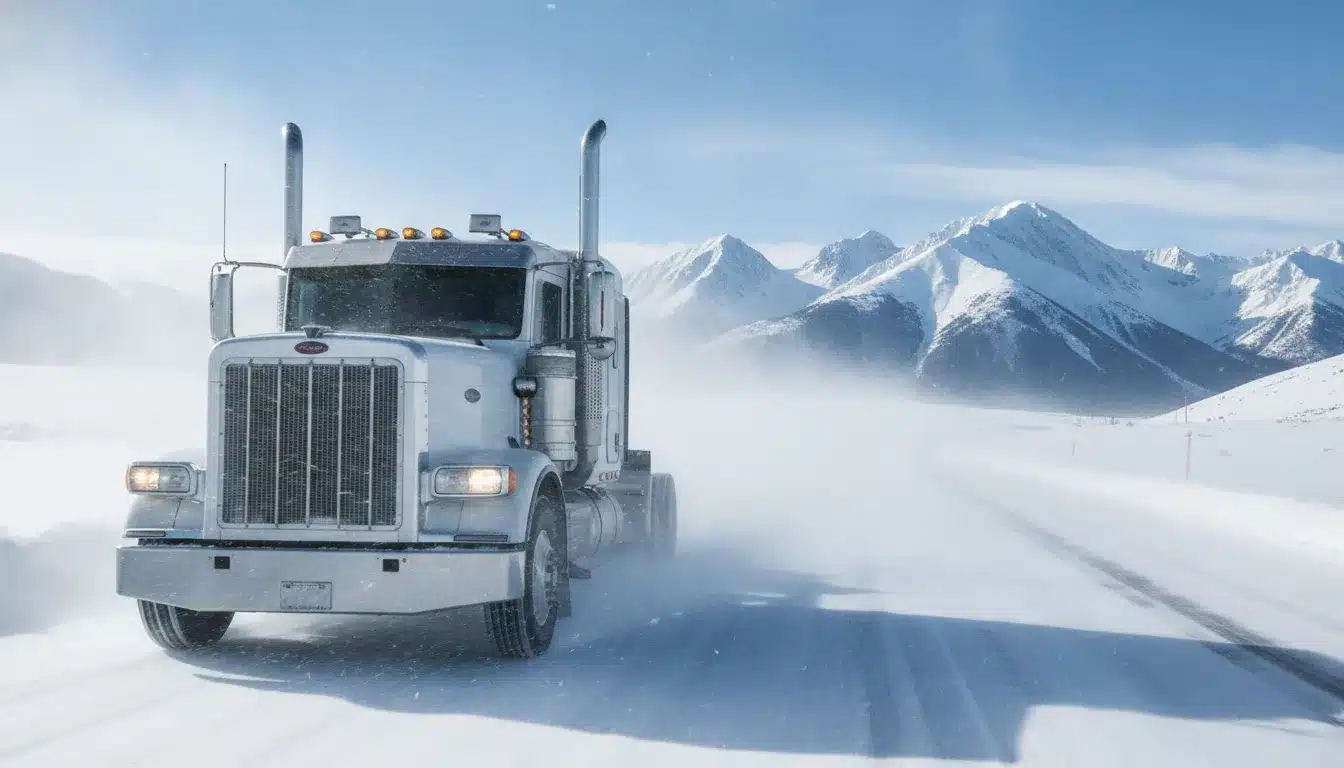
Winter turns a routine run into a test of judgment, equipment, and patience. For an owner operator, a preventable slide can damage more than a truck: it can interrupt deliveries, increase repair costs, and put your business under pressure.
The most useful winter driving tips are simple but non-negotiable: inspect your tires, brakes, lights, battery, wipers, and mirrors before every trip. Clear ice and snow from the entire vehicle; slow down for changing conditions; and leave more following distance and travel time than usual. Carry chains and an emergency kit, and check road conditions before you roll.
Safety is part of protecting your long-term earning potential as an owner operator, not an obstacle to it.
Schedule a free owner operator consultation with AG Express Line or explore the rent-to-own trucking program to see how to get behind the wheel.
Before choosing a speed, route, or departure time, it helps to understand why winter conditions create such a serious risk for professional drivers.
Why Winter Driving Is a Real Threat for Owner Operators
Winter weather is more than an inconvenience for a professional truck driver. Winter storms, bad weather, and poor road conditions contribute to nearly 500,000 crashes and more than 2,000 road deaths every winter in the United States, according to the AAA Foundation for Traffic Safety. For an owner operator, every trip through snow, ice, wind, or freezing rain carries a personal safety risk and a business risk.
Winter driving is a real threat because one mistake, breakdown, or weather-related delay can put your safety, equipment, delivery schedule, and income at risk.
A company driver may still face a difficult day after a crash or mechanical failure, but an owner operator also has to manage the financial consequences. A preventable incident can mean repair bills, missed loads, insurance complications, lost driving time, and damage to a clean safety record. A disabled truck can continue costing money while it is parked, even when it is not producing revenue.
That is why preparation should be treated as part of running the business, not as an optional extra. Safety and consistent vehicle maintenance are especially important in winter. Checking the truck before departure, allowing more time for the route, and choosing not to push through dangerous conditions can protect both the driver and the business.
The financial cost of winter downtime
Winter delays are not always avoidable. Road closures, chain requirements, poor visibility, and collisions can interrupt a schedule even when a driver is careful. The goal is to reduce the risks that are within your control. A sound winter plan helps you identify equipment problems before they become roadside failures and gives you room to make safer decisions when conditions change.
- Downtime: A breakdown or crash can take the truck out of service and disrupt upcoming work.
- Repairs: Ice, snow, and harsh conditions can expose weak tires, batteries, brakes, lights, or wipers.
- Safety record: Avoiding preventable violations and collisions helps protect your ability to keep operating.
- Personal safety: A driver who is rested, prepared, and willing to slow down has more options when the road deteriorates.
The size and weight of a commercial vehicle also limit how quickly it can respond. The Federal Motor Carrier Safety Administration notes that large trucks and buses may need up to two football fields to stop safely. And that driving too fast for conditions increases crash and rollover risks. Read the guidance on safe truck and bus driving before the season gets difficult.
Winter driving tips are most useful when they support a clear business decision: protect the driver, protect the truck, and protect the ability to work tomorrow. Slowing down, delaying a departure, or stopping in a safe location may cost time in the moment, but it can prevent a far more expensive outcome.
Winter Driving Tips for Your Pre-Trip Inspection
A thorough pre-trip inspection gives you a chance to find small problems before cold temperatures, snow, and ice turn them into roadside delays. Before leaving the yard, inspect the wipers, lights, battery, tires, and brakes. Confirm that the defroster produces warm airflow and that the wipers clear the windshield without streaking. Test every exterior light, including marker lights and trailer lights, because reduced visibility makes it harder for other drivers to see your rig.
Use this checklist before each winter run:
- Tires: Check inflation, visible damage, valve stems, and tread across every tire. Use a tread-depth gauge rather than relying on appearance. The legal minimum is 2/32 of an inch, but worn tread offers less margin when roads are wet, slushy, or icy.
- Chains: Make sure chains are aboard, properly sized for your tires, and free of damaged links. If you have not used them recently, practice installing them in a safe area before the trip. You do not want to learn in freezing wind beside a mountain pass.
- Brakes and battery: Look for air-system issues, unusual brake wear, loose connections, corrosion, or weak starting performance. Cold weather can expose a battery that seemed adequate in mild conditions.
- Visibility: Verify that the defroster, heater, and wipers work, then clear ice and snow from the cab, trailer, mirrors, windows, and lights. Do not rely on a small cleared patch of glass or leave packed snow on the trailer roof where it can fall onto traffic.
- Fuel: Keep the fuel tank at least half full. That reserve provides flexibility if traffic stops or a route closes, and it helps reduce the risk of frozen fuel lines during extended cold.
How deep should my tire tread be in winter?
Answer: Tire tread should measure at least 2/32 of an inch, the minimum specified in this checklist, but winter conditions call for an honest assessment of remaining traction. Replace tires that are at the minimum, unevenly worn, cracked, or damaged rather than treating the legal threshold as a performance target. Review the full semi-truck maintenance checklist as part of your regular maintenance routine.
Which winter conditions call for which checks?
| Winter condition | The check that protects you |
|---|---|
| Ice, snow, or slush on the pavement. | Confirm tire tread, inflation, and chains are ready before you roll. |
| Reduced visibility from snow or spray. | Test wipers, defroster, and every exterior and trailer light. |
| Deep cold and freezing fuel. | Keep the fuel tank at least half full and confirm the battery holds a charge. |
| Slick stopping distances. | Verify brake condition and plan a five-to-six-second following distance. |
Once you roll, keep the inspection mindset active. The Federal Motor Carrier Safety Administration recommends checking mirrors every 8 to 10 seconds and scanning about 15 seconds ahead for traffic issues, work zones, and other hazards. In snow or spray, that forward scan helps you identify slowing traffic before you need to brake suddenly. While frequent mirror checks reveal vehicles moving into your blind spots.
Before departure, review the safety items that may be checked during a roadside stop with this guide to preparing for an FMCSA roadside inspection. A few extra minutes at the yard can protect your visibility, equipment, schedule, and the people sharing the road.
Black Ice and Stopping Distance: Slow Down to Stay Safe
Black ice is dangerous because it can look like ordinary pavement until your tires lose grip. It often forms when temperatures fall below 32 degrees Fahrenheit, especially on bridges, overpasses. Shaded stretches, and roads that stay cold after the surrounding pavement has begun to dry. Watch for a surface that looks unusually glossy, dark, or wet without visible spray from other vehicles. Steering that suddenly feels light or a small drift at the wheel can also signal that traction is disappearing.
Why is black ice so dangerous for trucks?
A loaded tractor-trailer has much more weight and momentum to control than a passenger car. Large trucks and buses may need the distance of up to two football fields to stop safely. And driving too fast for weather or road conditions increases the risk of a crash or rollover, particularly on curves and ramps. The exact distance depends on speed, weight, tires, grade, and surface conditions, but ice removes the margin a driver normally has for correcting a mistake. A car may regain control after a brief slide, while a truck can continue moving forward or begin to swing into another lane.
When black ice is possible, ease off the accelerator and let the truck slow gradually. Avoid sudden braking, hard steering, and abrupt lane changes. If the vehicle begins to slide, stay calm, look toward the path you want to follow, and make smooth, controlled corrections. Do not use cruise control on slick roads because it can make it harder to manage speed and traction changes. If conditions deteriorate beyond what you can safely handle, reduce speed further and find a safe place to stop rather than forcing the route.
Following distance is one of the most practical winter driving tips for preventing a chain-reaction crash. Increase the gap to five or six seconds in winter conditions. Using a fixed roadside object to measure the time between the vehicle ahead passing it and your truck reaching it. Leave even more room when visibility is poor, traffic is slowing, or the road has visible ice. That space gives you time to recognize brake lights, respond smoothly, and use the truck’s available braking distance without panic.
Keep scanning well ahead for shaded pavement, stopped traffic, changing road texture, and curves that may require an earlier speed reduction. Check mirrors regularly so you know whether another vehicle is beside or behind you before you make a controlled adjustment. Slowing before the hazard is safer than braking hard once you are on it.
Source: FMCSA truck and bus driver safety guidance; AAA winter driving advice.
Tire Chain Requirements by State: Know Before You Roll
Chain laws are not uniform across the country. Requirements can change by state, road segment, vehicle weight, and current weather conditions, so an equipment check at the start of winter is not enough. Before dispatch, review the rules for every state and mountain corridor on your route. Washington, Oregon, California, Colorado, and other states post chain-up or Snow Zone signs at mountain passes when conditions become hazardous. A clear road at the bottom of a pass does not mean chains will not be required farther ahead.
Oregon provides a useful baseline for commercial drivers: vehicles over 10,000 pounds GVW must carry chains whenever road conditions might require their use or when Snow Zone signs are posted. That rule is not a substitute for checking the requirements where you are operating. But it shows why carrying chains before the weather turns is part of responsible dispatch planning. Failure to carry or use required chains can create citations, delays, closed-road problems, and missed delivery windows. Review Oregon’s commercial winter vehicle guidance and use each state’s transportation department for current local requirements.
Do owner operators need to carry chains in every state?
Not necessarily under the same conditions. But an owner operator should carry the correct chains for the truck and trailer whenever the route or forecast could trigger a requirement. Do not assume that a chain law applies only to company drivers. Commercial vehicle rules generally follow the vehicle and the roadway, not the driver’s employment arrangement. Confirm the required number, approved equipment, and timing rules before leaving the yard. If your route crosses several states, save the relevant transportation department pages or alerts so a last-minute change does not catch you unprepared.
Practice installing chains before the trip. Learning in a warm yard is far safer than trying to understand the process on an icy shoulder with traffic passing nearby. Do not wait until the last minute to chain up. Pull into a safe, level, designated chain-up area while you still have room and visibility. Avoid installing chains on the shoulder of a travel lane whenever a designated area is available.
When you must work outside the cab, wear warm, reflective clothing and keep your legs pointed away from the travel lane. Stay alert to traffic, use hazard lighting as appropriate, and keep the work area organized so you can finish without rushing. After installation, check the fit and recheck the chains after moving a short distance, following the equipment manufacturer’s guidance.
Chain planning belongs alongside your broader compliance preparation. Use AG Express Line’s FMCSA roadside inspection preparation guide to reinforce the inspection habits that help you stay ready before winter conditions become a problem. The best winter driving tips are practical: know the rule, carry the equipment, and make the safe decision before the pass forces it.
Mountain Passes and Road Closures: Plan Your Route
Mountain routes can change quickly when snow, ice, wind, or poor visibility make a pass unsafe for commercial traffic. A route that is open when you leave the yard may have chain requirements, travel restrictions, or a full closure by the time you reach the climb. That is why route planning is one of the most practical winter driving tips for an owner-operator. Build time into the trip to check conditions before dispatch and again during the run, rather than treating the original route plan as fixed.
Use the transportation department or 511 service for every state on your route. In Oregon, the official guidance directs drivers to TripCheck.com for chain information, Snow Zone notices, road closures, emergency alerts, and cameras showing mountain passes and highways. Oregon drivers can also call 511 for road-condition information. Other states provide similar tools through their departments of transportation, so save the relevant sites and phone numbers before the weather turns. A navigation app can help with general routing, but it should not be your only source for commercial-vehicle restrictions.
How do I check if a mountain pass is closed?
Check the state transportation department’s live road-condition map, closure notices, and pass cameras before you depart. Confirm the information near the start of the climb, especially when a storm is active, and ask dispatch or a reliable local contact about conditions if reports conflict. Look for more than the word “open.” A pass may be open with chains required, reduced speeds, escorts, or restrictions on certain vehicle combinations. If the route is closed, identify a legal place to wait or a documented detour instead of continuing toward the closure point with no stopping plan.
Chain-up areas are part of that plan. When signs or road reports indicate chains may be required, do not wait until the last curve or steepest section. Pull into a safe, level, designated chain-up area before conditions deteriorate. Oregon’s commercial-vehicle guidance specifically warns drivers not to install chains on the shoulder of a travel lane. Wear warm, reflective clothing, keep your equipment accessible, and practice installing the chains before the trip. Learning in freezing wind beside moving traffic is not a reasonable preparation strategy.
Plan for the possibility that a pass will remain closed for hours. Mark fuel stops, rest areas, truck parking, and other safe stopping points before you commit to the route. A planned delay is easier to manage than running short on fuel or parking after every nearby space is full. This guide to planning your winter route can help you think through safe parking options before availability becomes an emergency. Give yourself enough time to stop without violating hours-of-service limits or pressuring yourself to drive into worsening conditions.
Before rolling, confirm the forecast for the pass, the expected temperature trend, chain status, and at least one alternative. Keep the plan flexible, communicate changes early, and remember that a delayed load is recoverable. A collision, roadside chain installation, or stranded truck can create far greater costs for your safety, equipment, and business.
Securing Your Load for Winter Driving
Winter weather can turn a properly secured load into a handling problem if you do not account for ice, snow, and changing road conditions. Freezing rain can stiffen or add weight to tarps, while wet snow may collect on top of a trailer and shift as the truck moves. Ice can also hide loose straps, damaged hooks, or gaps that need attention before departure.
Start with a hands-on securement check after loading and again before you leave the yard. Confirm that every tie-down, strap, chain, binder, and anchor point is rated for the cargo and in usable condition. Look for cuts, fraying, stretched webbing, bent hardware, and frozen mechanisms. Straps should be positioned to hold the cargo in place without rubbing against sharp edges. Use edge protection where appropriate, and make sure the tarp is the right size, free of tears, and fastened evenly on all sides.
Do not assume that tension alone will protect the load. Recheck the securement after the first stretch of driving, particularly if precipitation has changed to freezing rain or heavy snow. A tarp that flaps, loosens, or collects water needs attention at the next safe location. Never stop on an unsafe shoulder simply to make an adjustment. Choose a well-lit, level area away from moving traffic.
Does snow on my tarp affect my load securement?
Yes. Snow and ice add weight and can change how the tarp sits over the cargo. As the buildup shifts or melts, tension may change and water can move across the load. Before departure, clear snow and ice from the tarp, trailer roof, cargo, mirrors, lights, and other exposed surfaces. Oregon’s commercial winter guidance specifically advises drivers to clean ice and snow from the cab, trailer, mirrors, windows, and lights before operating. Review the full winter commercial vehicle guidance for additional preparation requirements.
Cleaning the trailer is also a responsibility to other road users. A slab of ice or packed snow can fall from a moving trailer, obstruct your view, damage another vehicle, or cause a crash. Remove buildup from around doors, hinges, locking bars, and securement hardware so you can confirm that everything is closed and working as intended. If the cargo itself has frozen or accumulated snow, clear it without damaging the packaging or compromising the tie-down arrangement.
Finally, remember that a shifted load changes more than the appearance of the trailer. Weight that moves can affect steering response, trailer balance, braking, and rollover risk. On a slick road, those changes leave less room to recover. Drive at a speed appropriate for the conditions, increase following distance, and use smooth steering and braking. Large trucks and buses may need up to two football fields to stop safely, according to the Federal Motor Carrier Safety Administration. A secure load gives you a better starting point, but it does not replace slower, deliberate winter driving.
Build a Winter Weather Plan Before You Leave the Yard
A safe winter trip starts before you pull away from the yard. Look at the forecast for every part of the route, not only the conditions at pickup or delivery. Weather can change quickly across a long run, especially near mountain passes, lake-effect areas, and open stretches where wind creates blowing snow. Check state transportation updates for road closures, snow-zone notices, chain requirements, and cameras along the route. Oregon, for example, directs commercial drivers to check TripCheck.com before a trip for current road and emergency information. Use the transportation department for each state on your route as the equivalent source.
What should I carry in a winter emergency kit for my truck?
Carry a shovel, road flares, extra food, and water, along with warm clothing and other supplies that can help you manage an unexpected delay. Keep the kit accessible rather than buried beneath freight or luggage. A charged phone, backup power source, flashlight, reflective gear, gloves, and basic tools are practical additions, but they do not replace sound judgment. If conditions deteriorate, stop in a safe location before the truck becomes immobilized. AG Express Line also offers emergency roadside truck service for situations that require professional help.
Give the trip more time and more fuel margin
Do not build a winter schedule around the best-case travel time. Allow extra time for reduced speeds, traffic backups, chain requirements, inspections, and a safe stop if visibility or traction worsens. Adding time protects more than an appointment. It reduces the pressure to keep driving when the responsible choice is to wait. Plan fuel stops before the tank gets low, and leave enough fuel margin for detours. Idling during a delay, or a closed road that forces you to continue to the next available stop.
Identify safe parking options before you leave, including locations near weather trouble spots and likely stopping points. A planned stop is safer than searching for a shoulder or crowded lot after the storm arrives. Planning your winter route should include where you can park legally, safely, and away from moving traffic if conditions become unsafe.
Document the checks that protect your equipment
Before departure, clear ice and snow from the cab, trailer, mirrors, windows, and lights. Then check the wipers, lights, battery, tires, and brakes. These checks help you spot a problem while you are still in a controlled environment, rather than after a breakdown or loss of visibility on the road. The Oregon Department of Transportation specifically recommends these winter inspections and clearing accumulated snow and ice before operation.
Write the route, forecast checks, fuel plan, parking options, and pre-trip inspection into your normal dispatch or trip-planning process. A documented plan supports a clean safety record because it shows that winter decisions were deliberate, not rushed. It also protects your equipment by reducing avoidable strain, roadside exposure, and weather-related damage. For an owner-operator, that discipline is part of running a dependable business, not an extra task to skip when the schedule is tight.
Get a free winter driving and pre-trip planning consultation from AG Express Line today
Frequently Asked Questions About Winter Driving
These questions come up every season, and the answers help you translate winter driving tips into actions you can use on the road. Keep this section as a quick reference before your next cold-weather dispatch.
What are the biggest mistakes when driving in snow?
Answer: Driving too fast for conditions is the most common and most serious mistake. Sudden braking, hard steering, and tailgating remove the time and space a loaded truck needs to react on slick pavement. Reduce speed, leave a five-to-six-second following distance, brake gently, and keep every movement smooth so you preserve traction.
How do I know if my tires are safe for winter driving?
Answer: Check the tread depth on every tire with a gauge. The legal minimum is 2/32 of an inch, but worn tread gives you less margin on wet, slushy, or icy roads. Look for cracks, uneven wear, and damage, and replace tires that are near the limit rather than treating the legal threshold as a performance target.
Do owner operators need to carry chains like company drivers do?
Answer: Yes. Chain requirements follow the vehicle and the roadway, not your employment arrangement. Commercial vehicles above certain weights must carry and use chains whenever a state posts Snow Zone signs or road conditions require them. Confirm the specific rules for every state and mountain corridor on your route before dispatch.
What is a safe following distance for a truck in winter conditions?
Answer: Increase the gap to five or six seconds behind the vehicle ahead, using a fixed roadside object to measure the time. Add even more space in poor visibility, heavy traffic, freezing rain, or on visible ice. That buffer is what lets you stop smoothly instead of in an emergency.
Ready to Plan Your Next Step?
Winter safety starts with sound preparation, but your broader owner-operator plans deserve the same careful attention. A conversation with AG Express Line can help you understand available support and decide whether the path fits your goals. Schedule a free consultation with AG Express Line to discuss becoming an owner operator and preparing for the winter season. If you want to move toward business ownership without a large down payment, explore the rent-to-own trucking program to see how experienced drivers can get behind the wheel. Bring your questions, and the team can walk through the next steps clearly, without pressure or unrealistic promises.


